

How Robinhood Got 800,000 People on Its Waitlist

In December 2013, Robinhood's founders, Vladimir Tenev and Baiju Bhatt, had a one-field signup page live at robinhood.io. It read: "The world's $0 commission stock brokerage. Stop paying $10 for every trade." Over the next 15 months, 800,000 people joined its waitlist.
This is what that looks like in numbers:
- First 24 hours: more than 10,000 signups
- February 2014: 160,000
- December 2014, when the iOS app launched: almost half a million
- March 2015, when it opened to everyone: 800,000 invited
On Saturday, December 14, after the page had leaked to Reddit, someone the founders didn't know posted it to Hacker News, and it reached #1. Tenev recalls seeing hundreds of people on the site at once. The team already had a press launch planned, and it went ahead four days later, on December 18, with seed funding news and a TechCrunch story.
No-code waitlist builder with landing pages, referrals and email automation. Launch your product to an audience that's already waiting.
Get startedThe Four Pillars of Robinhood's Waitlist Success
Four parts of Robinhood's waitlist are well documented. Here's what each one looked like.
A Crystal-Clear Value Proposition
Their success started with the messaging. In a financial industry known for complexity and jargon, they chose radical simplicity.
- The Problem: Stock brokers charging $10 per trade
- The Solution: Commission-free trading
- The Promise: Democratized access to the stock market
- The Timing: Perfect for post-2008 distrust in traditional banking
The first line was the price, $0 commission, and the second told visitors what they'd stop paying.
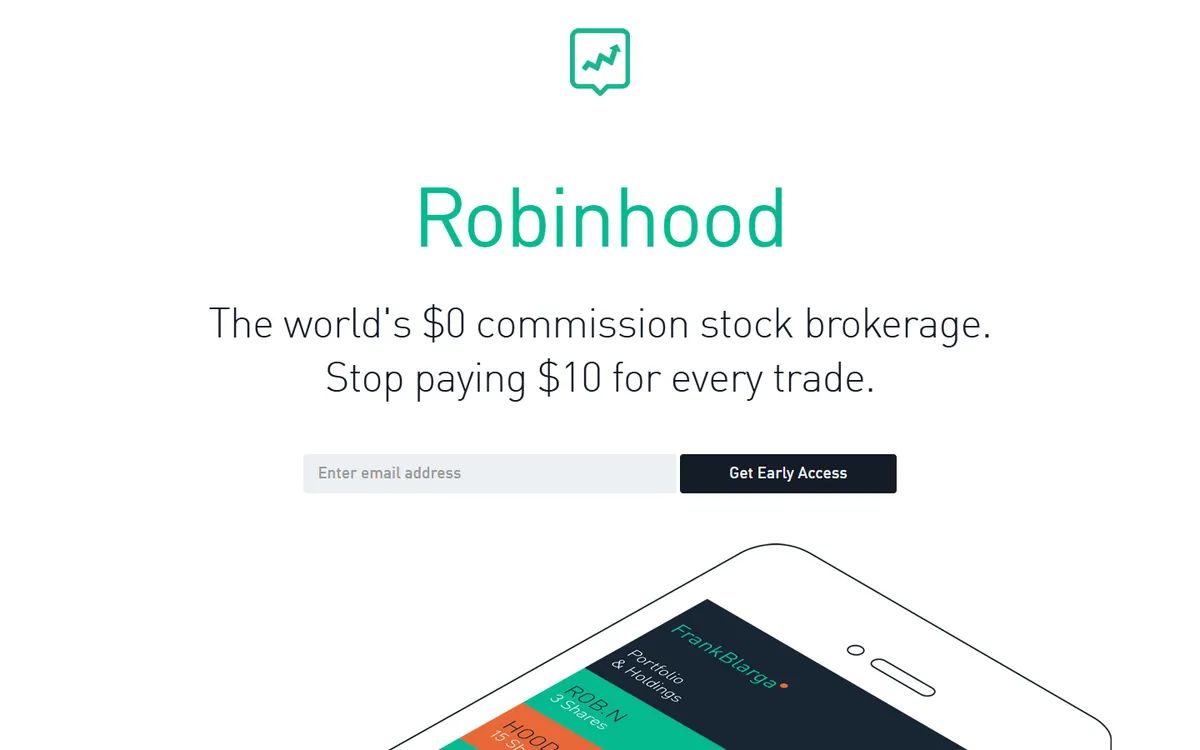
Robinhood's early-access page on December 14, 2013. Wayback Machine capture
Frictionless Signup Process
Their signup process was as simple as it gets.
- One form field: an email address
- One button: "Get Early Access"
Psychology-Driven Referral System
Signing up got you "a place in line in Robinhood's virtual waiting room", and invites went out by position. By mid-2014, the screen after signup showed how many people were ahead of you and how many were behind you. Tenev has said Mailbox's waitlist inspired the format.
Sharing moved you up. In December 2013, TechCrunch reported that tweeting about Robinhood bumped up your place in line, and by February 2014 the page said every referral improved your spot, with no cap.
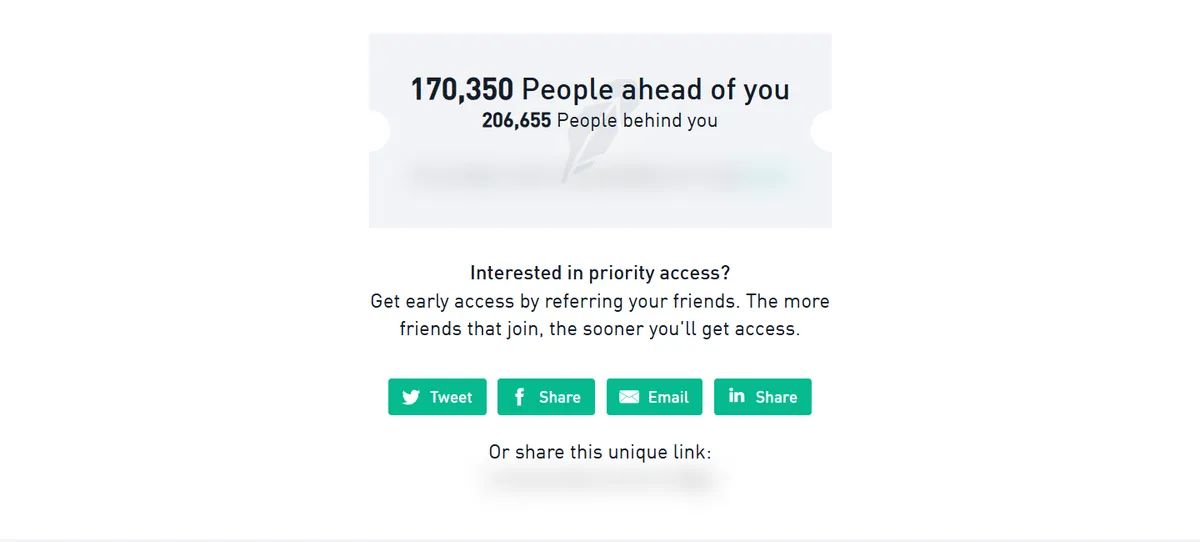
A Robinhood waitlist screen archived on June 13, 2014, with the person's email address and referral link blurred.
This viral approach mirrors successful strategies used by Harry's and detailed in our analysis of Dropbox's referral program.
Invites by Place in Line
Getting signups is one thing; keeping people waiting for more than a year is another. Even after the iOS app launched in December 2014, Robinhood sent invites in batches, by place in line. It only opened to everyone in March 2015, so a better spot meant getting in sooner for the whole 15 months.
The Results
TechCrunch reported more than 10,000 signups in the first 24 hours, and Tenev has said about 50,000 joined in the first week. The list reached 160,000 by late February 2014 and almost half a million by the iOS launch in December 2014. When Robinhood opened to everyone in March 2015, it said it had invited "all 800,000 people who signed up for our waitlist".
The first day's spike, most of it from Hacker News by Tenev's account, was about 1% of that total. After that, referral bumps, press and word of mouth all ran at the same time, and Robinhood hasn't published how much each one brought.
You can measure that split on your own list. Our guide to key metrics for your waitlist shows how to work out how many signups come from referrals.
How to Apply This to Your Launch
Robinhood's success might seem like lightning in a bottle, but their strategy can be adapted for almost any product launch. The key is understanding the principles behind their approach and thoughtfully applying them to your specific context. If you're launching a mobile app like Robinhood did, our app waitlist playbook covers the store-specific side: collecting emails before the App Store and turning the queue into day-one downloads.
Avoid common waitlist mistakes that can undermine even the best-planned strategies.
Here's how you can implement each key element.
Craft Your Value Proposition
Robinhood's first line was six words long and built around one number, $0. Your message needs to do the same.
- Make it clear enough for anyone to understand
- Focus on one key benefit that matters most
- Address a specific pain point
- Keep it under 10 words if possible
Optimize Your Signup Flow
Every extra field, every additional click, is an opportunity for potential users to drop off. Make joining your waitlist feel effortless:
- Minimize form fields to the essentials
- Provide instant confirmation
- Show clear progress indicators
- Make the CTA prominent and compelling
Build Your Referral Engine
Make sharing feel natural and rewarding and design your system to tap into genuine sharing motivations.
- Show real-time queue position
- Make sharing one-click easy
- Provide multiple sharing options
- Give immediate feedback on referral success
Plan Your Communication
Develop a communication strategy that maintains excitement without becoming annoying. Each message should provide value.
- Send welcoming first impressions
- Provide meaningful progress updates
- Celebrate community milestones
- Keep messaging consistent but not repetitive
The Tools You Need
Building a waitlist system like Robinhood's doesn't have to be complicated. That's exactly why we built Waitlister. Our platform includes everything you need.
- Easy, customizable waitlist landing pages
- Position-based referral systems
- Automated welcome emails and email broadcasts
- Analytics dashboards
- And more...
Ready to build your own viral waitlist? Create your free Waitlister account and start growing your pre-launch audience today.